
How do you run your company
with a Nokia 3310?
Imagine checking the status of work with one message. AI applications handle incoming tasks, prepare what is needed and monitor open work. They move routine tasks forward; only situations that actually need your intervention reach you.
The short answer: yes, checking company status through a simple channel such as SMS can be designed technically. The phone is only the interface; the work happens in the application connecting company data and tasks. The company, messages and setup below are fictional; they are not presented as a working WhiteGate customer system.
The pulse of your business can fit into one question.
In a well-built AI working setup, incoming work does not get lost, a pending reply does not remain in someone's memory and a delay is not discovered at the last minute. Work status, its owner and the next decision become visible. The Nokia 3310 shows this idea on the smallest screen.
The sea looks good. How is work going?
Your phone breaks while on holiday. You temporarily borrow a relative's old 3310. No internet, no apps. When you wonder how the team's work is going, you write one message: STATUS.
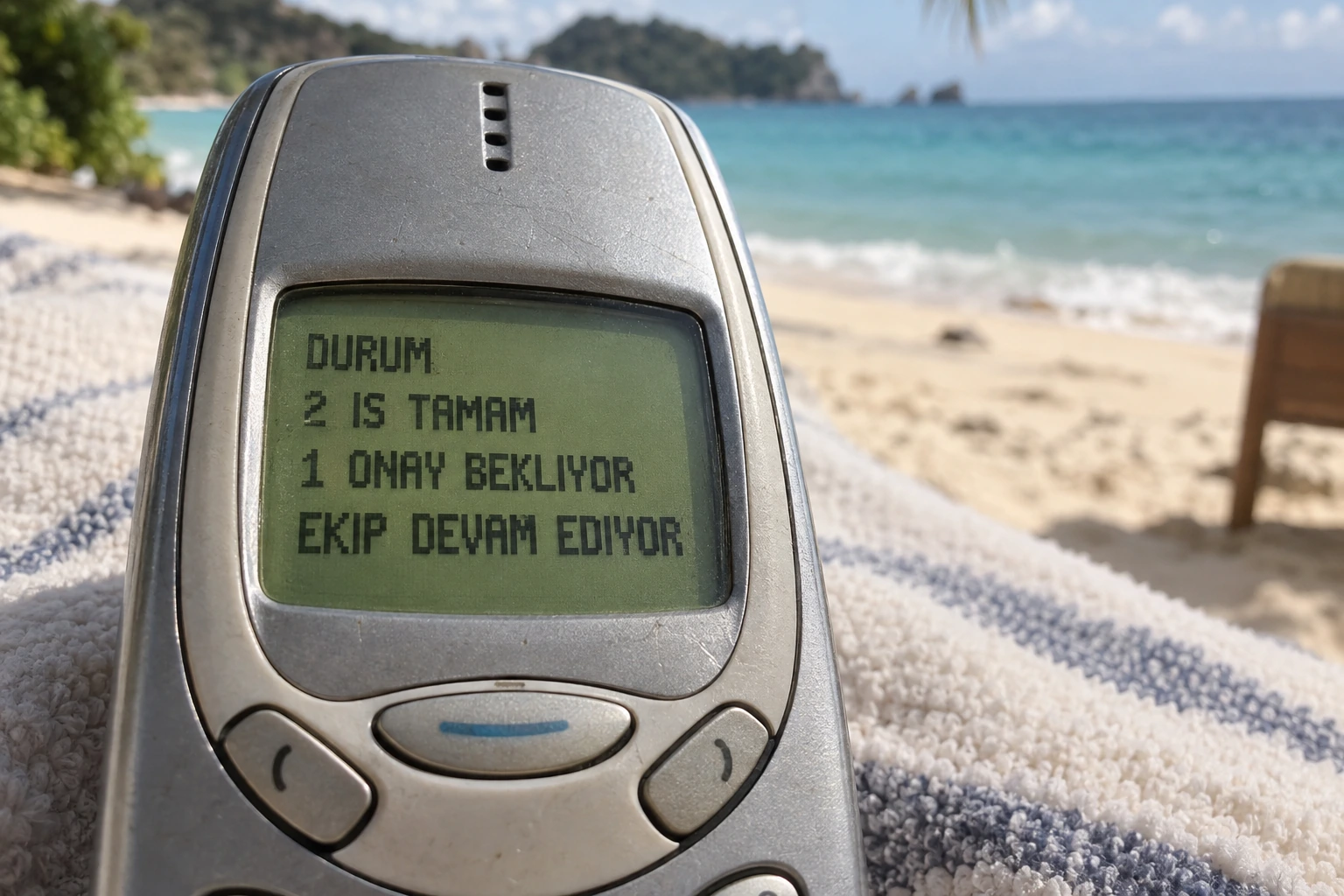
While you turn back to the sea, one AI application gathers current information, another prepares the next task and a third monitors open work. The day's messages do not all pile up in front of you. Standard situations move forward within defined boundaries; decisions and exceptions come to you.
The phone isn't doing the work.
AI workers do the work.
WhiteGate first learns how the work runs, then defines each AI worker's tasks, the information it can use and the boundaries where it must stop. In this scenario, three work together:
- REQUEST
Handles incoming work
It reads new customer requests, flags missing information and creates a task for the right person. Nobody needs to keep watch over the inbox.
- PREPARATION
Prepares the answer
Brings the required information together and asks for anything missing. It can answer questions within defined boundaries directly; it leaves matters such as pricing or new commitments to an authorized person.
- TRACKING
Moves the work forward
Tracks pending responses and delivery dates, reminds the team, and only sends you signals that require a decision or indicate a delay.
Morning new work is recorded. At noon missing information is completed. Evening you get a summary of open work. You guide things where needed instead of following every step.
One SMS, less tracking work.
- You don't have to ask where the work stands. Pending work, deliveries and customer responses appear in one short summary.
- Not every notification is a decision. AI applications continue routine follow-up; they come to you if a situation requires your authority.
- The team's work gets easier too. The request, draft, owner and next step are prepared in advance.
- The phone is just the doorway. You can also access the same setup later from a computer or another channel if you wish.
First step: choose the priority task.
We choose the operational workflow that needs the most tracking, then build a useful first way of using it with your team.
We plan
We look at what your team checks repeatedly throughout the day. What information can AI workers find, and which decisions must you make? This is where we choose the first task to set up.
We build
We set up AI workers tailored to you with defined tasks and connect them to the tools you use. We test reading requests, preparing drafts, asking for missing information and tracking open work with real examples.
We launch
Your team starts using it in daily work. Instead of long reports, you get the summary with a short question such as “STATUS.” Together, we fix what does not work smoothly during initial use.
To check the status of the work so you do not have to read every conversation one by one.
The design defines which tasks move forward on their own and which come to you.Would this idea fit my business?
Do I really need to use a Nokia 3310?
No. The 3310 is the playful face of this story. The real aim is to deliver the business information you need through the simplest channel that suits you.
What can AI applications do on their own?
They can read requests, gather information, track work and answer routine questions with known sources. Which actions require authorized approval is defined alongside the information used, permission to act and risk of error.
What do we look at first?
We look at one priority work area, such as quotes, customer requests or deliveries. Together, we clarify your existing tools, repetitive work and decision points. If there is a suitable application path, we define its scope.
 How would it work in my company? Get in touch.
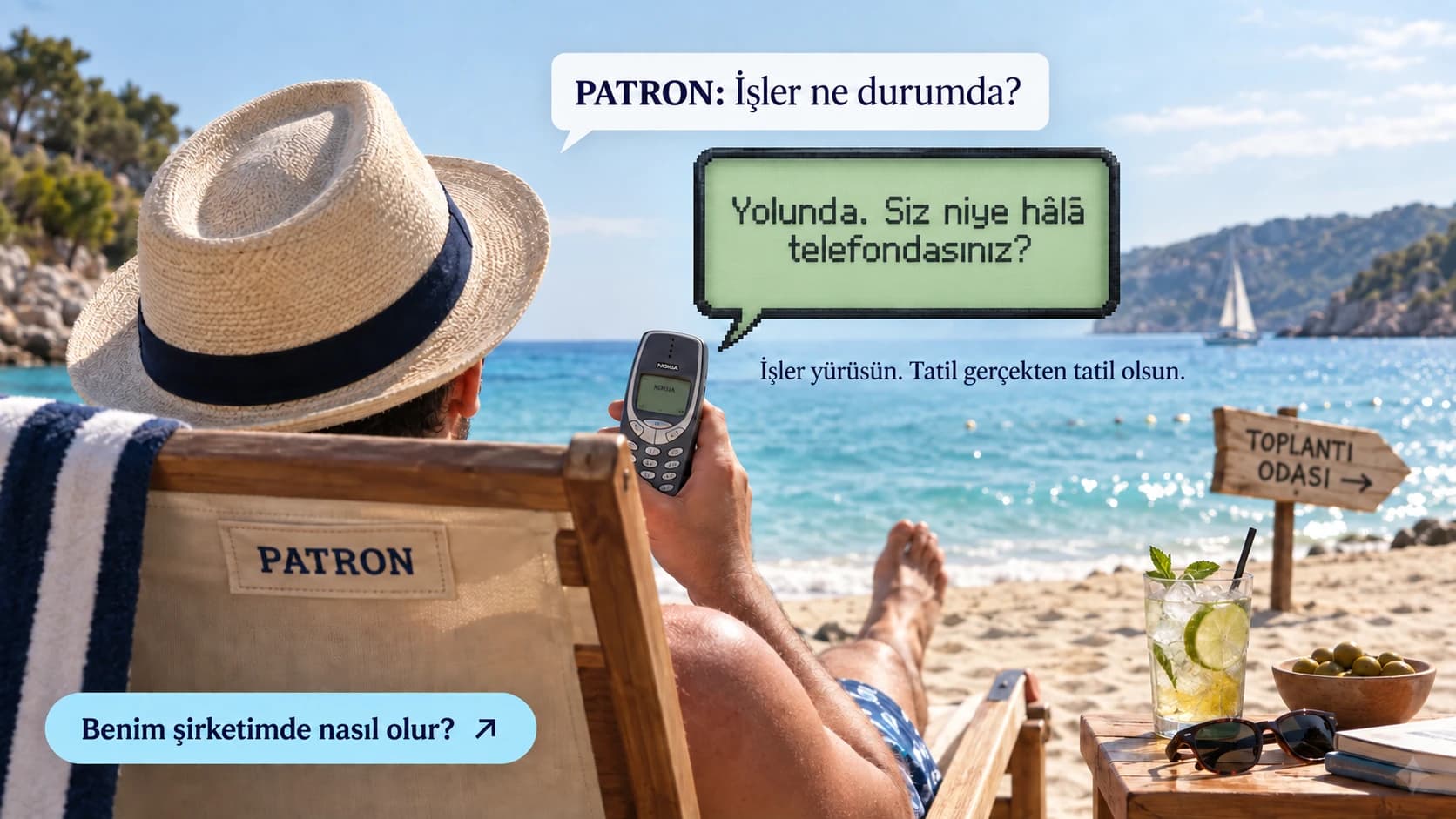
PATRON: How is work going?
All good. Why are you still on your phone?
Let the work keep moving. Let your holiday feel like a holiday.